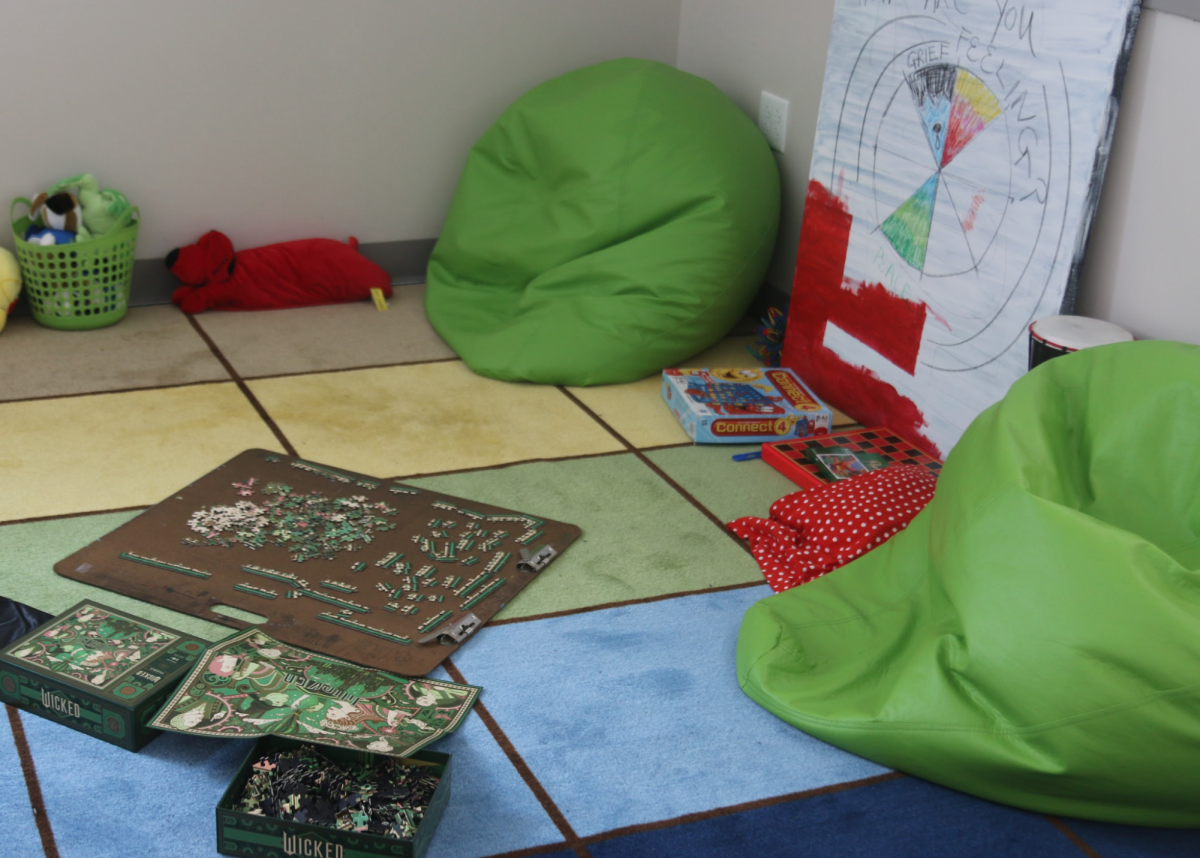
Painting often says what words can not. This idea is what powers the art therapy program at Miami Palmetto Senior High. This program is a hidden gem that provides students with the useful tools they need to express their emotions creatively and healthily.
Catered to kids with special needs, this service offers students free rein to create any artwork that they want, ranging from beading to watercolor.
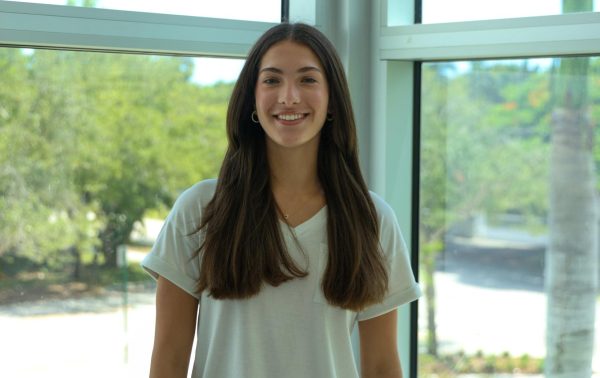
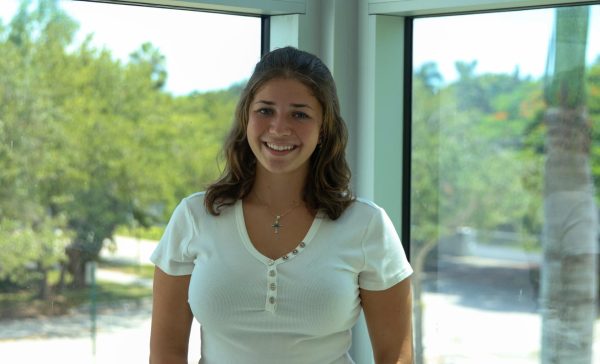
“With art therapy, you get to actually use artwork to express your feelings, so it incorporates the traditional counseling with the art making, so that you have another way to express yourself,” Art therapist Leah Guzman said.
Guzman first discovered her passion for art therapy in high school when, presenting art for a show, a judge asked her if she was familiar with art therapy, after learning of her passion for both psychology and art. One of the driving forces that led her to pursue her career as an art therapist was when the judge told her about how art therapy helped cancer patients get on the road to healing.
“And so she sent me this news article that had this little boy who had cancer, and he had an art therapist. And so she would come to the hospital and have him draw a Pac-Man to eat away his cancer cells. And I just thought that was really inspiring,” Guzman said.
She later discovered that the boy went into remission, and she sympathized with his journey of recovery, not just physically but emotionally. This only furthered her ambition to combine the two subjects she loves into something meaningful.
Now, Guzman is an art therapist not just at MPSH, but also at Howard Drive Elementary School and Palmetto Middle School.
“It’s not really about the product that you’re making. It’s more about the process. So you don’t have to make a pretty picture,” Guzman said. “It’s more about just being able to relate your feelings to the artwork, and then giving yourself that space to reflect on it too, and having someone to talk to about it as well.”
Advanced Placement Art History and painting teacher Christine Moros also sees the correlation between art and emotion.
“Even with art history, you know, the colors and all that stuff play into emotion. There are so many things that play into emotions. Like silly things, like if you go into a room and it’s painted red, you’re going to feel maybe that the room is smaller. Your subconscious will feel that, whereas if you go into a room that’s painted a light blue color [you will feel that the room is bigger],” Moros said.
In an art therapy setting, these colors do more than just alter the perception of a space. They bypass verbal communication and communicate directly to the subconscious thought. The act of mark-making is less about creating a masterpiece and more about the physical release of internal pressure.
“As far as actual mark making, even if you say you don’t know how to draw, there are so many studies that just benefit from having a sketchbook where you’re applying, whether it’s pencils or water, and just the idea of a release that can be very therapeutic,” Moros said.
The skills that students learn go beyond the in-the-moment feeling created through art therapy sessions.
“It’s focused on coping skills. So ideally, they’re going to learn skills here, whether it’s journaling work, they can take their journal with them, and they can use it at home. Or 10 years from now, they’re like, ‘I really enjoyed making art back then. Let me get back into it or use it on a regular basis,’” Guzman said. “So it’s really being able to think about your emotions coming up, and there’s just different ways to process it.”
While the art pieces may never hang in an art gallery, their worth is measured by the emotional relief they provide. Success is not defined by perfection, but the peace of mind discovered while creating it.