

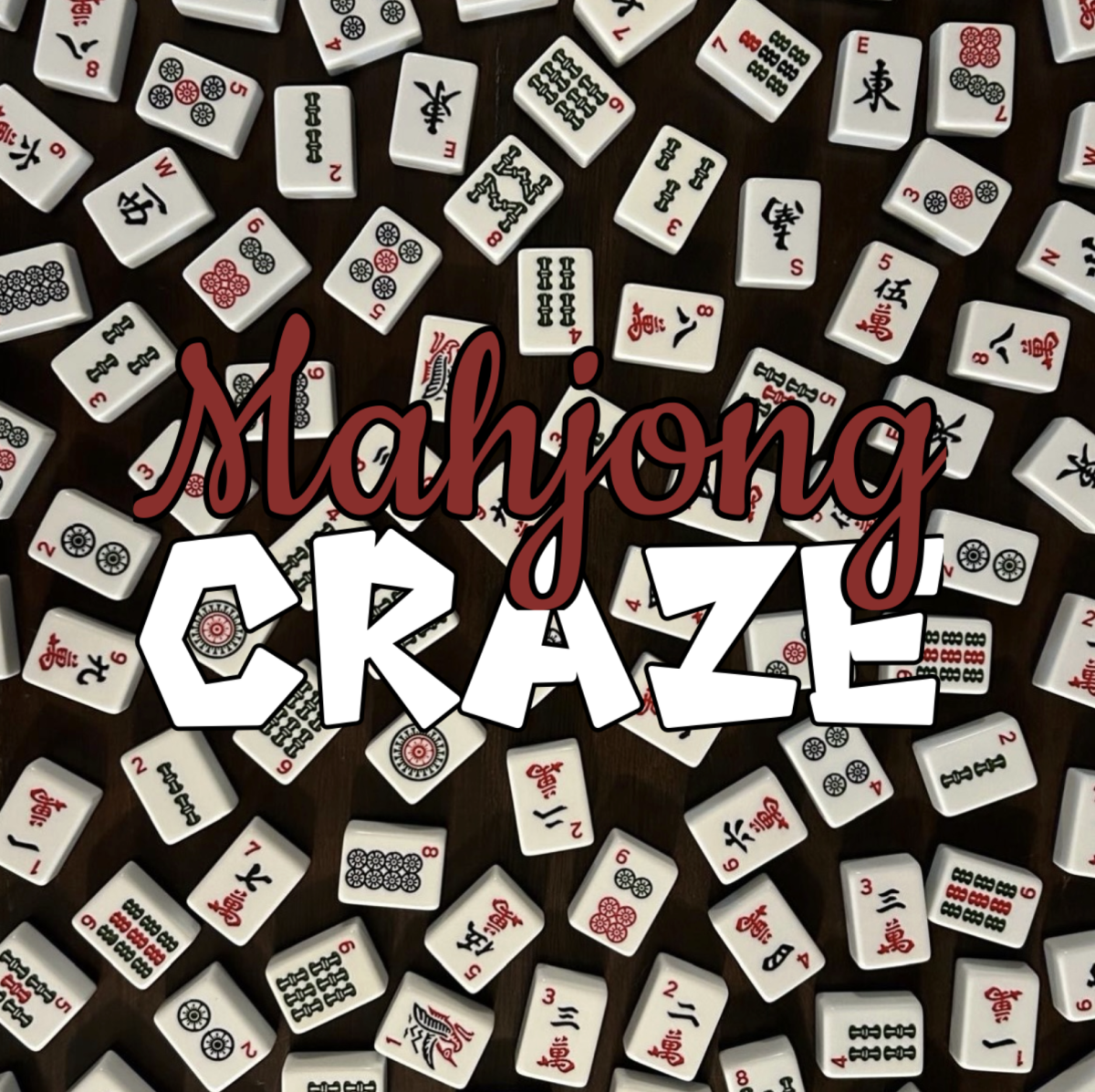
Over a hundred tiles in a Mahjong set unite players from all around the world. American Mahjong, Chinese Mahjong and many other deviations are games that foster relationships between families and friends over a game full of Jokers, Flowers, Dragons and more.
While this game from an American perspective, for a time, was considered an “old person’s” game, Miami Palmetto Senior High senior Janie Cai has been surrounded by this game for many years and never felt that the game was an “old people” game.
“For those outside of Asian and Asian-American communities, Mahjong may have seemed like an “old people” game. However, Mahjong has always been popular to play because of the Chinese diaspora in the west and Southeast Asia. It’s a way for Chinese immigrants to reconnect with the culture and maintain intergenerational relationships,” Cai said.
Chinese Mahjong was first developed in the Qing Dynasty, which reigned from 1644-1912. In its early years, it served as a pastime for Chinese aristocrats and gradually spread to the general public. Mahjong acquired its name because it is the Chinese word for sparrow, which relates to the sound that the tiles make when being shuffled, resembling the chirping of sparrows.
Advanced Placement World History teacher Julianne Farkas plays American Mahjong, which originated in the early 1920s when it was imported by Chinese immigrants. 17 years later, the American version established itself with the creation of the National Mah Jong League which was later modified by Jewish American women in New York during the late 1930s.
The background of this tiles game makes it engaging for players of all demographics, as well as the short amount of time it takes to play the game. While some people have the idea that Mahjong takes hours to play like Bridge, a few games of American Mahjong can be played in an hour.
“Instead of going to tea or just having lunch, it gives you something to do. It’s not like Bridge. You can meet with friends for lunch for two hours, have lunch and play three or four games,” Farkas said.
Regardless of the version of Mahjong played, it provides brain stimulation, making players think and calculate their next move.
“It’s actually good brain activity,” Farkas said.
While Farkas enjoys the social aspect and thinking that is required for it, Cai enjoys the strategy component and the uncertainty that comes along with it.
“My favorite move is ‘pong,’ where you can take a tile unexpectedly out of turn if you achieve three of a kind. It challenges you to think about probability and human psychology,” Cai said.
The uprising of Mahjong may be attributed to the “trendiness” that has emerged, with groups of players decorating their tiles beautifully, or it could be a lasting effect of COVID-19. When people were stuck quarantining in their homes, there was a significant spike in the playing of games, and Farkas believes that Mahjong’s revival can be partly attributed to that.
All over the world, people are able to play with tiles that have a deeply sentimental meaning. Cai feels that Mahjong, through social media, has been granted the attention that it deserves.
“I think it’s gaining traction outside of Asian communities due to globalization and a greater exposure to East Asian cultures from apps like TikTok, Instagram and Red Note. People are appreciating the game as a symbol of unity, intelligence and tradition,” Cai said.
Whether one is aiming to create new friendships, master a new game or connect with their family, hop on the American trend of the ancient game, and learn to play Mahjong.