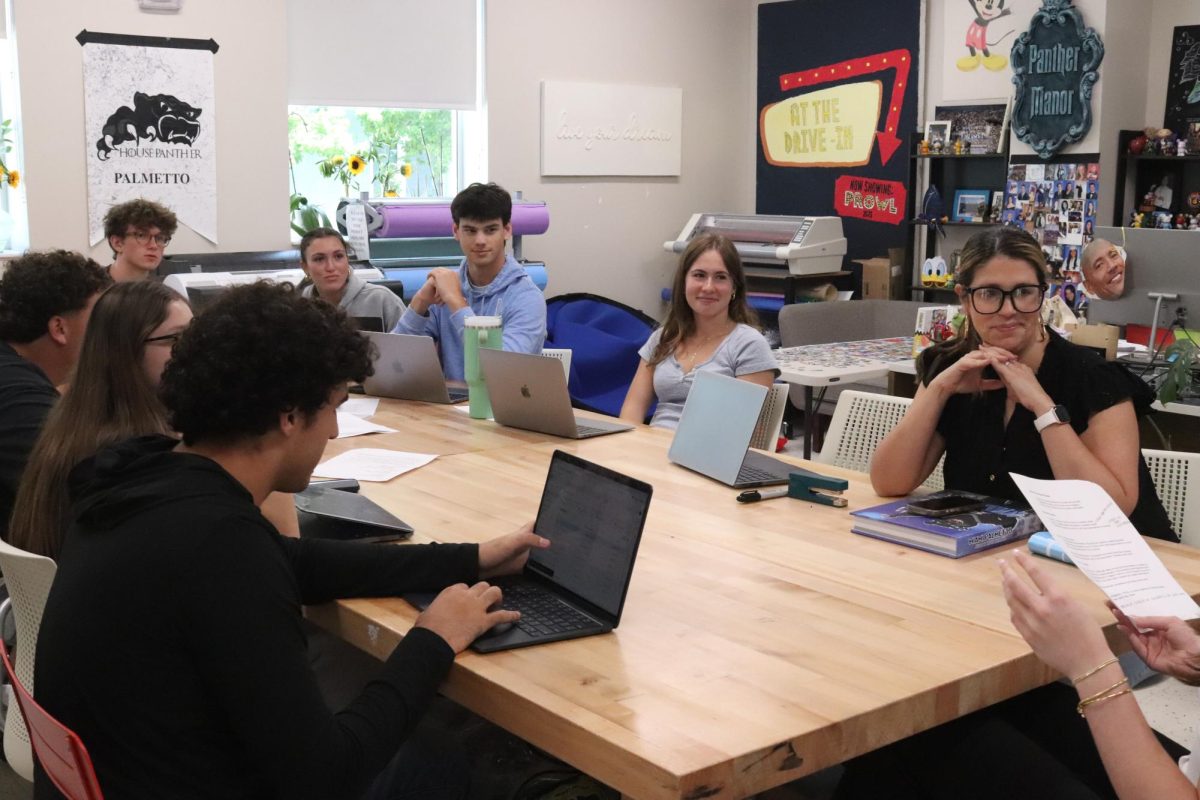



After noticing how many boys on campus struggled to talk openly about their well-being, Miami Palmetto Senior High launched a No Shave November campaign to raise awareness about men’s mental and physical health.
Advanced Placement Seminar teacher Marcos Cohen helped organize the project after noticing how many young men seemed unsure of where to turn when dealing with stress.
“We’ve seen young men looking lost,” Cohen said. “We wanted to show that mental health isn’t tied to one group. Young men need support too.”
One of Cohen’s main goals is to help break the silence many boys feel pressure to maintain.
“We are statistically known to not communicate our feelings,” Cohen said. “I hope this encourages young men to speak up when they’re not in a healthy state of mind.”
Although the challenge centers on growing facial hair, Cohen emphasized that the purpose goes far beyond appearance. Students who cannot grow facial hair can still participate by growing the hair on their head or supporting friends who are taking part.
Freshman Samson Stone joined after hearing about the cause and quickly recognizing its importance.
“Men’s mental health gets overlooked a lot,” Stone said. “I learned that men die by suicide at higher rates, and that made it feel more important.”
Senior Rocco Cattaneo said he joined after learning Cohen was leading the challenge and saw it as an opportunity to support others.
“If I can help raise awareness, then I will,” Cattaneo said.
He claimed he has seen pressure on boys to stay quiet about stress or emotions, and hopes his participation in the challenge can help ease that stigma.
Moreover, senior Cayden Reyes said joining No Shave November encouraged him to reflect more on how daily stress affects him.
“It helped me realize how stress affects me and how I can help myself,” Reyes said. “[Boys] feel like they have to push everything down.”
As the month continues, Cohen hopes the campaign inspires more open discussions on campus. For him, the goal goes beyond growing hair. It is about creating an environment where students feel understood, supported and connected.
“When boys know they’re not alone, they’re much more likely to reach out,” Cohen said.